
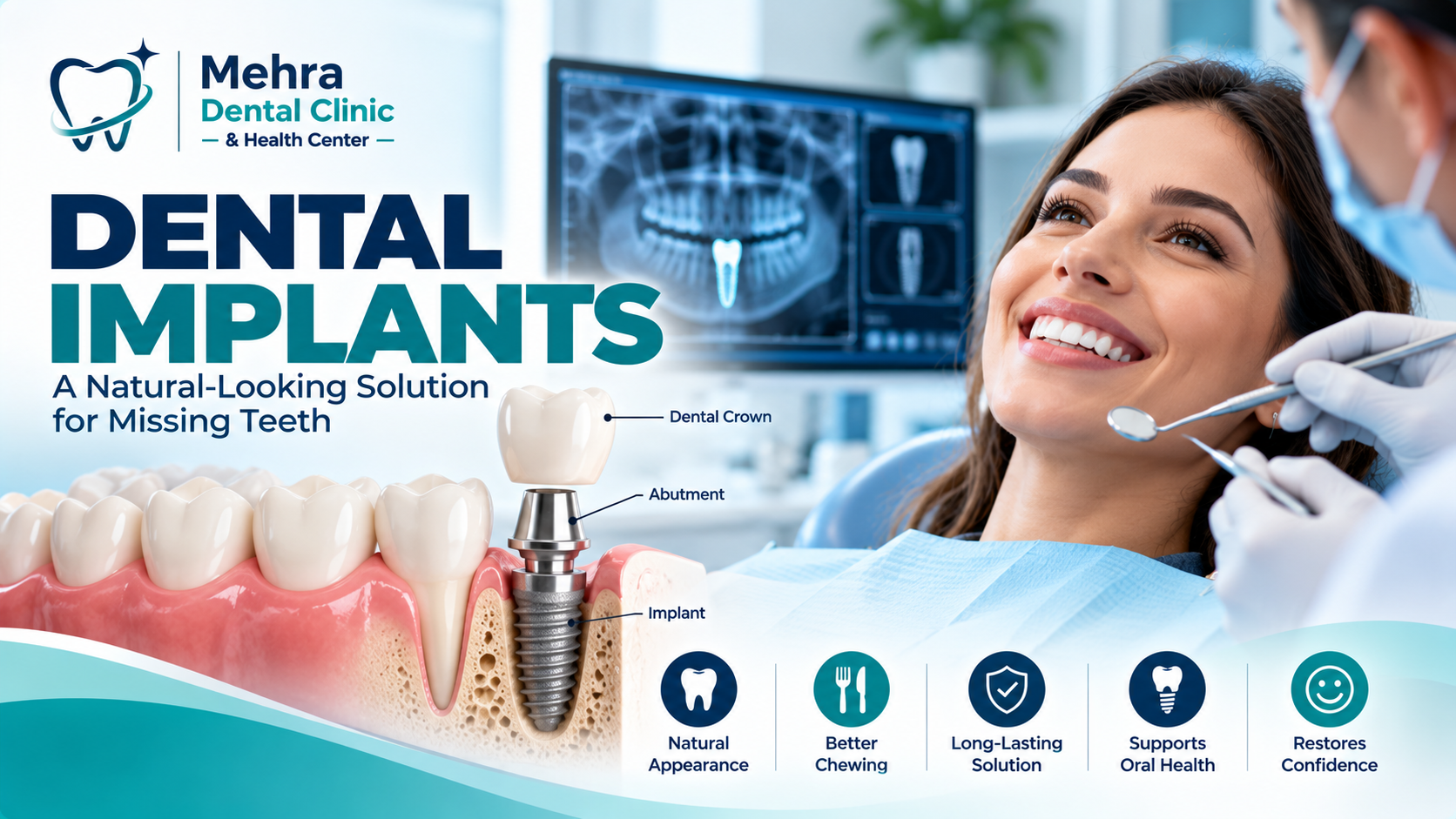
Missing teeth can affect more than just your smile. They may make chewing difficult, affect speech, and change the way your remaining teeth function. Dental implants are a modern tooth-replacement option designed to replace missing teeth with an implant-supported restoration that looks and functions naturally.
If you are considering dental implants, understanding the procedure, benefits, recovery process, and factors that influence treatment cost can help you have a more informed discussion with your dentist.
What Are Dental Implants?
A dental implant is a small post, commonly made from titanium or another biocompatible material, that is surgically placed into the jawbone to support a replacement tooth. After the implant integrates with the surrounding bone, a connector called an abutment can be used to support a dental crown, bridge, or other restoration.
Unlike removable dentures, implants are anchored in the jaw and can provide a stable foundation for replacing one or more missing teeth.
Who May Need Dental Implants?
Dental implants may be considered for people who have lost one or more teeth because of tooth decay, gum disease, injury, infection, or other dental conditions. However, implant treatment is not automatically suitable for everyone.
Your dentist will typically evaluate your oral health, jawbone condition, gum health, medical history, and the condition of the surrounding teeth before recommending an implant treatment plan.
Benefits of Dental Implants
- Natural-looking appearance: Implant-supported restorations can be designed to blend with your surrounding teeth.
- Improved chewing: A stable tooth replacement can make it easier to eat a wider variety of foods.
- Support for oral function: Replacing missing teeth can help restore important functions such as chewing and speaking.
- Stable tooth replacement: Unlike removable dentures, implants are anchored to the jawbone.
- Replacement of individual teeth: An implant can be used to replace a single missing tooth without necessarily relying on adjacent teeth for support.
- Long-term solution: With appropriate planning, placement, oral hygiene, and regular dental care, implants can provide a durable tooth-replacement option.
How Does the Dental Implant Procedure Work?
Dental implant treatment usually involves several stages. The exact treatment timeline varies depending on the patient's oral health, bone condition, number of missing teeth, and the type of restoration required.
1. Dental Examination and Treatment Planning
The first step is a detailed dental examination. Your dentist may use dental X-rays or other imaging techniques to assess the teeth, gums, jawbone, and available space for implant placement.
2. Implant Placement
During the surgical stage, the implant is placed into the jawbone at the planned location. The area is managed using appropriate anesthesia and surgical techniques.
3. Healing and Bone Integration
The implant needs time to heal and integrate with the surrounding bone. This biological process, known as osseointegration, provides the foundation needed to support the final restoration.
4. Abutment and Restoration
Once the implant has sufficiently healed, an abutment and custom-made restoration can be placed. For a single missing tooth, this commonly involves an implant-supported crown.
How Long Does Dental Implant Treatment Take?
The overall treatment timeline can vary considerably from patient to patient. Some cases may be completed in a relatively short period, while others require additional healing or preparatory procedures.
If there is insufficient bone in the proposed implant area, a dentist may recommend a bone-grafting procedure before or during implant treatment. Therefore, the final timeline should be determined after a proper clinical evaluation.
What Factors Affect Dental Implant Cost?
The cost of dental implants is not the same for every patient. Several factors can influence the overall treatment cost, including:
- Number of implants required
- Type and quality of implant system
- Type of crown or restoration
- Need for bone grafting or other preparatory treatment
- Complexity of the dental case
- Diagnostic imaging and laboratory requirements
- Experience and expertise of the treating dental team
Because treatment requirements differ between patients, it is better to get a personalized treatment plan and cost estimate from a qualified dentist rather than relying on a single fixed price.
Dental Implant Aftercare
Proper aftercare plays an important role in maintaining your oral health and protecting your implant-supported restoration.
- Follow your dentist's post-treatment instructions carefully.
- Maintain regular brushing and interdental cleaning.
- Attend recommended follow-up appointments.
- Avoid smoking or tobacco use, particularly during the healing period.
- Report unusual pain, swelling, bleeding, or other persistent symptoms to your dental team.
Can Dental Implants Fail?
Although dental implants have high success rates in appropriately selected cases, complications can occur. Factors such as poor oral hygiene, gum disease, smoking, certain medical conditions, inadequate bone support, and problems with treatment planning can influence outcomes.
Regular dental checkups and good oral hygiene are important for monitoring both the implant and the surrounding tissues.
Are Dental Implants Better Than Dentures?
Dental implants and dentures serve different clinical needs. Implants are fixed into the jaw and can provide a stable foundation for replacement teeth, while dentures are removable appliances.
The appropriate option depends on factors such as the number of missing teeth, bone condition, oral health, budget, personal preferences, and overall treatment requirements. Your dentist can explain which options are suitable for your particular situation.
Why Professional Dental Evaluation Matters
Dental implant treatment should be planned after a comprehensive examination. Modern dental practices may use digital imaging and other technologies to improve treatment planning and patient communication.
Dental clinics can also use digital solutions to streamline non-clinical workflows such as appointment management, patient communication, reporting, and online services. Technology companies such as Tyon Technologies can help businesses develop customized digital solutions for their evolving technology requirements.
Conclusion
Dental implants can provide a stable and natural-looking option for replacing missing teeth. The treatment generally involves careful planning, implant placement, a healing period, and placement of the final restoration.
However, every dental case is different. A professional examination is essential to determine whether implants are appropriate and what treatment approach is most suitable for you.
If you are considering replacing a missing tooth, schedule a consultation with a dentist to discuss your oral health, available treatment options, expected timeline, and personalized cost estimate.
Written by
Dr. S. Nanda