
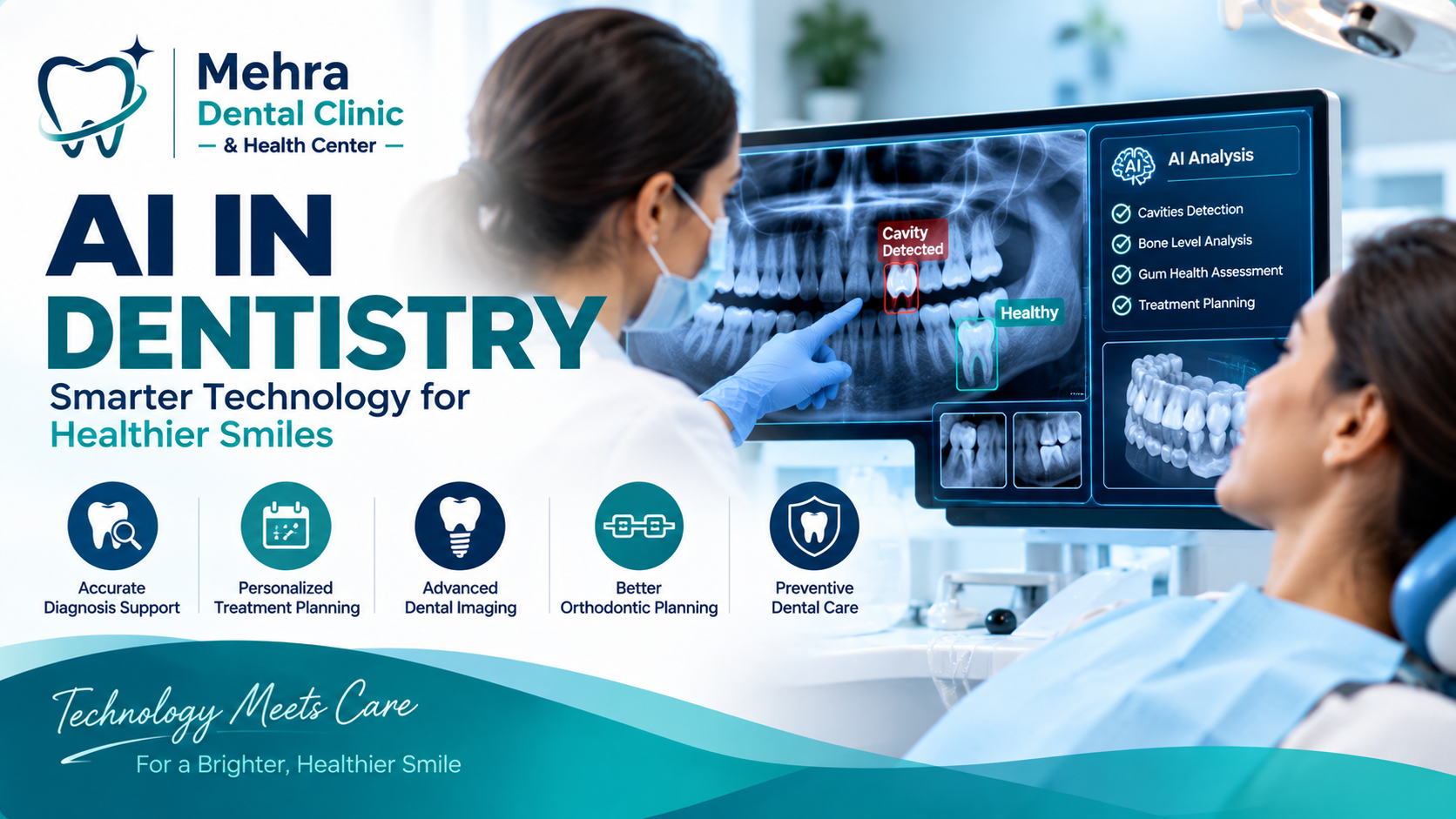
Artificial intelligence (AI) is changing the way many healthcare professionals work, and dentistry is becoming an important part of this digital transformation. From analyzing dental images to supporting treatment planning, AI-powered technologies are helping dental professionals work with large amounts of clinical information more efficiently.
While AI is not a replacement for a dentist, it can act as a valuable decision-support tool. Modern dental practices can use digital technologies to improve diagnostic workflows, treatment planning, patient communication, and preventive care.
What Is Artificial Intelligence in Dentistry?
AI in dentistry refers to computer systems and machine learning technologies that can analyze information such as dental X-rays, photographs, scans, patient records, and other clinical data.
Depending on the technology and its intended use, AI can help identify patterns in dental images, highlight areas that may require closer examination, assist with measurements, and support treatment planning. The dentist remains responsible for interpreting the clinical findings and deciding the appropriate treatment for each patient.
How Can AI Help Dentists?
1. AI-Assisted Dental Imaging
Dental X-rays and other imaging techniques provide important information about teeth, roots, bone, and surrounding structures. AI systems can analyze certain types of dental images and assist in identifying patterns that may require further clinical evaluation.
Research has explored AI applications for detecting dental caries, identifying anatomical structures, analyzing periodontal conditions, and assisting with other radiographic tasks.
2. Early Detection of Dental Problems
Early detection can be important in managing many dental conditions. AI-assisted image analysis may help dentists identify potential areas of concern and examine them more closely during a clinical evaluation.
For example, AI research in dentistry has investigated the detection of dental caries from clinical images and radiographs. These technologies are designed to support professional assessment rather than provide an independent diagnosis.
3. Support for Treatment Planning
Treatment planning often requires dentists to consider multiple factors, including dental images, tooth position, bone structure, existing restorations, and the patient's individual needs.
AI can assist with certain analytical and measurement tasks, potentially making digital treatment planning more efficient. Research is also investigating AI-assisted planning across areas such as orthodontics, implant dentistry, and restorative dentistry.
4. AI in Orthodontics
Orthodontic treatment involves detailed assessment of tooth position, jaw relationships, and facial structures. AI-based systems have been studied for tasks such as cephalometric landmark identification, classification, and digital treatment analysis.
These tools may help orthodontic professionals process measurements and organize information, while the final treatment plan remains dependent on professional evaluation.
5. Personalized Dental Care
Every patient's dental condition is different. AI can potentially help organize and analyze patient information to support more personalized approaches to dental care.
In the future, AI-supported systems may become increasingly useful for identifying risk patterns, supporting preventive care, and helping dental professionals monitor changes over time.
How Technology Is Supporting Modern Dental Clinics
As dental practices become more technology-driven, AI can work alongside modern digital tools to improve clinic workflows, patient communication, appointment management, reporting, and other non-clinical processes. Technology companies such as Tyon Technologies can help businesses build and implement customized digital solutions that support these evolving healthcare needs.
Can AI Replace a Dentist?
No. AI should be viewed as a support technology rather than a replacement for a qualified dental professional.
A dental diagnosis involves much more than analyzing an image. Dentists consider symptoms, medical and dental history, clinical examination, radiographs or scans, patient preferences, and many other factors before deciding on treatment.
AI can help process information, but professional judgment and clinical examination remain essential. Current research also highlights limitations such as differences in datasets, imaging conditions, validation methods, and performance across different clinical situations.
Benefits of AI in Modern Dentistry
- Supports analysis of dental images
- Can help identify areas requiring closer examination
- Assists certain treatment-planning tasks
- May improve workflow efficiency
- Supports digital orthodontic analysis
- Can contribute to preventive and personalized dental care
- Helps dentists work with large amounts of digital information
What Are the Limitations of AI in Dentistry?
AI technology is developing rapidly, but it still has limitations. A model trained on a particular dataset may not perform equally well on every patient, imaging system, or clinical environment.
Research has emphasized the need for broader validation, diverse datasets, standardized evaluation methods, and prospective clinical studies before AI tools can be relied upon for wider clinical use.
For this reason, AI should complement—not replace—the expertise and responsibility of dental professionals.
The Future of AI in Dentistry
The future of dentistry is likely to become increasingly digital. AI, 3D imaging, digital scanning, computer-aided design, and other technologies are creating new possibilities for diagnosis, planning, monitoring, and patient communication.
As AI systems are validated through further research and integrated into appropriate clinical workflows, dentists may be able to use these tools to improve efficiency while continuing to provide personalized, professional care.
Conclusion
Artificial intelligence is becoming an important technology in modern dentistry. From dental imaging and caries detection to orthodontic analysis and treatment planning, AI can assist dental professionals in several areas of care.
However, technology works best when combined with professional expertise. A dentist's clinical examination, experience, and understanding of the patient's individual needs remain central to safe and effective dental treatment.
If you are considering any dental treatment, consult a qualified dentist for a proper clinical evaluation and personalized treatment plan.
Written by
Dr. S. Nanda